
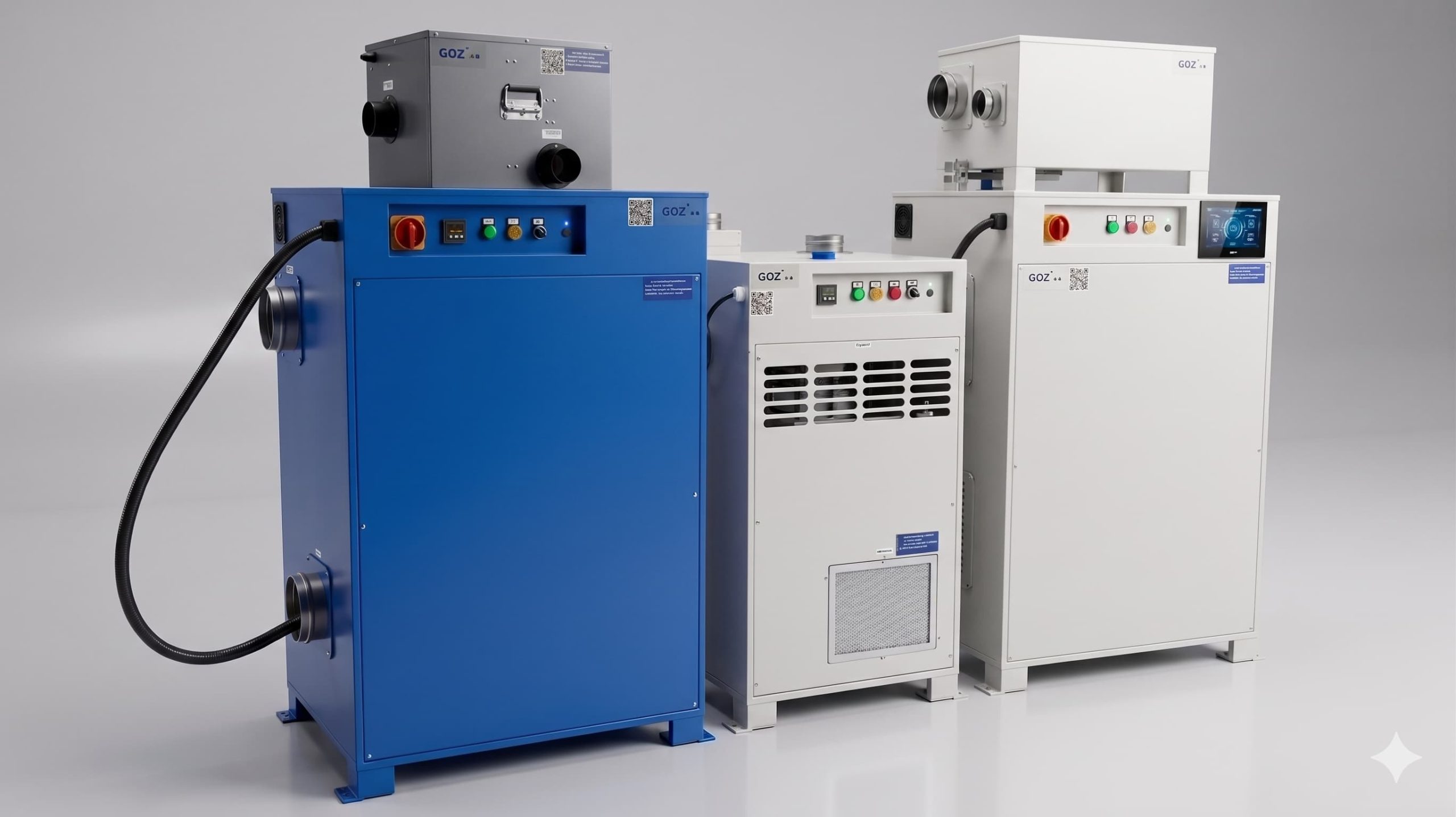
Choose the Right Desiccant Dehumidifier:Maintaining the proper humidity level is essential for many industrial manufacturing processes. However, humidity control requirements vary significantly across different industries. Choosing the right industrial desiccant dehumidifier requires careful evaluation of your production environment, operating conditions, and process requirements.
1. Define Your Target Humidity Level
The first step is to determine the humidity level your facility requires.
General warehouses typically maintain humidity at around 50% RH, while industries such as pharmaceuticals, electronics, food processing, lithium battery manufacturing, and precision production often require much lower humidity levels to protect products and ensure process stability.
Selecting the correct humidity target is the foundation of proper dehumidifier sizing.
2. Calculate the Required Airflow Capacity
A desiccant dehumidifier should provide sufficient airflow to remove moisture effectively.
Airflow requirements depend on several factors, including:
- Workshop area
- Ceiling height
- Number of personnel
- Fresh air ventilation volume
- Production process requirements
- Moisture load from equipment or materials
Proper airflow calculation ensures the system delivers adequate dehumidification performance while maintaining energy efficiency.
3. Consider the Operating Environment
Environmental conditions have a significant impact on dehumidifier performance.
Factories located in coastal regions, tropical climates, or areas with consistently high humidity should select industrial-grade desiccant dehumidifiers designed for continuous operation. Likewise, low-temperature applications require systems that can maintain stable performance under challenging conditions.Choose the Right Desiccant Dehumidifier
Choosing equipment designed for your specific environment helps improve reliability and extend service life.
4. Evaluate Energy Efficiency
Since industrial dehumidifiers often operate continuously, energy consumption is an important consideration.Choose the Right Desiccant Dehumidifier
Modern high-efficiency systems can significantly reduce operating costs through features such as:
- Heat recovery technology
- Intelligent PLC control systems
- High-performance desiccant rotor design
- Variable-speed fans and optimized airflow management
Investing in an energy-efficient system lowers long-term operating expenses and improves overall return on investment.
5. Consider Maintenance and After-Sales Support
Reliable equipment should also be easy to maintain.
Look for a manufacturer that offers:
- Easy access for routine maintenance
- High-quality components
- Spare parts availability
- Professional technical support
- Comprehensive after-sales service
A dependable supplier helps ensure stable, long-term operation with minimal downtime.
Applications of Industrial Desiccant Dehumidifiers
Industrial desiccant dehumidifiers are widely used in:
- Pharmaceutical manufacturing
- Food processing
- Electronics production
- Lithium battery manufacturing
- Shipbuilding and marine painting
- Bridge corrosion protection
- Cold storage facilities
- Wind power equipment manufacturing
- Aerospace and defense industries
Each application has unique humidity control requirements, making proper equipment selection essential for achieving optimal performance.Choose the Right Desiccant Dehumidifier
Conclusion
Choosing the right industrial desiccant dehumidifier involves more than simply selecting a machine with sufficient capacity. By evaluating your target humidity, airflow requirements, operating environment, energy efficiency, and maintenance needs, you can select a system that delivers reliable humidity control while minimizing operating costs.
A properly sized desiccant dehumidification system not only improves product quality and production efficiency but also provides a higher return on investment over the life of the equipment.
ASHRAE Handbook – HVAC Systems and Humidity Control Resources
https://www.ashrae.org/technical-resources/ashrae-handbook